
Perimenopause brain fog at work: what’s actually happening
Apr 30, 2026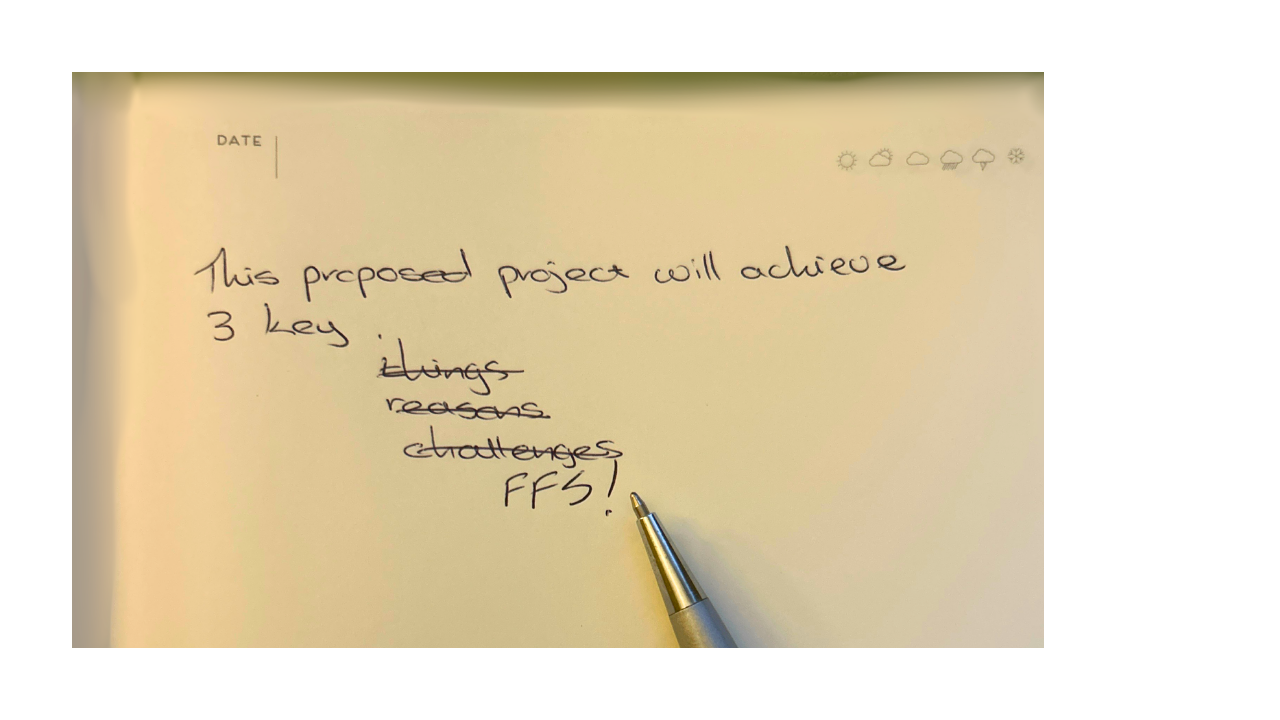
In my late 40s, I (Berni) started losing words mid-sentence. Not occasionally, but routinely. In meetings, in presentations, in conversations I’d had a hundred times before.
I lost the word “objectives” in a senior leadership meeting at the exact moment I needed to make my strongest point. Someone filled it in for me. The meeting moved on. I did too, externally at least.
Internally, it landed harder than I expected.
I didn’t have language for what was happening. I assumed I’d finally reached a point where I didn’t belong. (This is a common interpretation. I wrote more about that here → Why do I feel like I'm losing my mind in perimenopause?).
It wasn’t that.
For a lot of women, perimenopause brain fog doesn't show up most noticeably at home. It shows up at work, in the moments where you most need to be clear, articulate, and reliable.
If that’s where you’re feeling it, this is worth understanding.
What brain fog at work actually looks like
It isn’t always dramatic. More often it’s a pattern of small disruptions that accumulate over time.
Processing feels slightly slower than it used to. Not enough to stop you functioning, but enough that you notice it, particularly in fast-moving conversations.
Information doesn’t stick on the first pass. You reread things. You take more notes, not because the work is more complex, but because you’ve learned not to rely on recall in the same way.
Word retrieval is often where it becomes most visible. Language is social. Losing a word in private is an inconvenience. Losing it mid-sentence in a meeting is exposure. You find yourself circling around the word, describing it indirectly, hoping someone will pick it up or that you’ll find it before the moment moves on.
Decision-making can feel less immediate. The clarity that used to come quickly takes longer, or requires more effort to reach. Alongside that, confidence can shift in a way that’s difficult to explain. Not gone, but less automatic. Something you have to consciously reconstruct.
And layered through all of this is an awareness of how you might be perceived. The gap between who you know yourself to be professionally and who seems to be showing up can feel uncomfortably visible.
Why it hits harder at work
The cognitive changes themselves aren’t necessarily worse in professional environments, but they may be experienced more acutely there.
Part of that is context. At home, imprecision is tolerated. A lost word at the dinner table is barely noticed. A lost word in a boardroom carries a different weight. The stakes are higher, and so the experience is more charged.
There’s also the interaction between stress and hormonal change. Cortisol, the body’s primary stress hormone, affects many of the same cognitive processes that oestrogen supports, including working memory and verbal retrieval. In high-pressure environments, you’re often carrying elevated stress at exactly the moment you need those systems to function well. The two systems influence each other, and not helpfully.
Identity plays a role too. For women who have built careers on intellectual capability, on being articulate, reliable, and able to think clearly under pressure, these changes land in particularly sensitive territory. It isn’t just that something feels harder. It’s that something central to how you understand your professional self feels less stable.
What’s actually happening in the brain
The short answer is that your brain is adapting to a changing hormonal environment.
Oestrogen has receptors throughout the brain, including in areas responsible for memory, attention, and emotional regulation. During perimenopause, levels fluctuate rather than simply decline. The brain is now recalibrating to these hormonal changes.
Neuroscience research describes this as a period of significant restructuring. Brain imaging studies show changes in how the brain uses energy, particularly in regions associated with memory and cognition.
This helps explain why symptoms can fluctuate from day to day, stress and poor sleep amplify the experience and the changes often improve over time as hormones stabilise.
It also explains why the experience can feel so unsettling. Noticing changes in cognitive functioning can itself feel threatening, particularly when clear thinking is central to your sense of professional competence.
Is this a capability issue?
No. It isn’t.
This is the point where many women may draw the wrong conclusion, particularly in the absence of accurate information.
Brain fog at work is often interpreted as evidence that you’ve reached the edge of your capability, that you’re no longer as competent as you once were, or that you don’t belong in the role you’re in.
That interpretation is understandable, but it’s not necessarily correct.
What’s changing is the ease with which you can access certain cognitive functions under pressure. The underlying capability, your knowledge, your experience, your judgement, remains intact.
In fact, research on midlife suggests that many higher-order cognitive capacities continue to strengthen. Pattern recognition, decision-making based on accumulated experience, and emotional intelligence often improve through midlife and beyond.
The issue isn’t that you’ve lost ability. It’s that the conditions your brain is operating in have changed, and some functions are temporarily less efficient.
What becomes possible when you understand this
The most significant shift isn’t in the symptoms themselves, at least not immediately. It’s in how you interpret them.
When the experience is unnamed, it’s easy to default to self-blame. Once it’s understood, the same moment is read differently. Losing a word mid-sentence becomes frustrating, but not evidence of incompetence. Slower processing becomes something to work with, rather than something to conceal.
From that shift in understanding, practical adjustments become possible.
You might start to notice when you’re cognitively sharper and schedule more demanding work in those windows. You might rely more on notes or prompts rather than expecting recall to operate as it always has. You might allow slightly more time for thinking, rather than pushing for the same speed under all conditions. For example, writing down key points before meetings or allowing a pause before responding in fast discussions.
Self compassion matters more than most people realise here. Notice if you're speaking to yourself as you would to your best friend. It's not about 'letting yourself off the hook' - it's about speaking to yourself with compassion and kindness.
None of this is about lowering standards. It’s about working more effectively within a system that is temporarily recalibrating.
Where this leaves you
Brain fog at work in midlife is real. It can be confronting, particularly when it shows up in the moments that matter most.
But it isn’t a reflection of your capability, and it isn’t the story of who you are professionally.
It’s a phase of disruption in how your brain is functioning, not a loss of what you’ve built.
For most women, it’s also temporary.
If you’re in it, the most useful starting point isn’t pushing harder. It’s understanding what’s happening well enough to respond differently.
Frequently asked questions about perimenopause and brain fog at work
Is brain fog common during perimenopause?
Yes. Changes in memory, concentration, processing speed and word retrieval are commonly reported during perimenopause. Hormonal fluctuations can affect brain systems involved in cognition, while stress and poor sleep can make these changes more noticeable.
Why does perimenopause brain fog feel worse at work?
It isn't necessarily worse at work, but the demands of work can make it more noticeable. Meetings, presentations, rapid decision-making and high cognitive load create situations where difficulties with recall, concentration or word retrieval can feel particularly exposed.
Does perimenopause brain fog mean I'm becoming less capable?
No. Difficulty accessing a word quickly or holding information in working memory isn't the same as losing your knowledge, experience or professional judgement. Changes in cognitive efficiency shouldn't automatically be interpreted as changes in capability.
What can help with brain fog at work?
Reducing unnecessary reliance on memory can help: write down key points before meetings, use notes and prompts, allow thinking time before responding, and where possible schedule cognitively demanding work when you tend to feel sharper. Understanding what's happening can also reduce the self-doubt that often accompanies the experience.
Does perimenopause brain fog go away?
Cognitive symptoms can fluctuate substantially through the menopause transition and may improve as hormonal fluctuations stabilise. Individual experiences vary, however, and persistent or concerning cognitive changes are worth discussing with a healthcare professional.
For organisations: Perimenopause at work isn't only about physical symptoms. Reframe at Work focuses on the psychological and cognitive experience of perimenopause and how workplaces can better support women through the transition.
Want to get a clearer sense of where you're at?
The Fluxx Midlife Pulse is a short, five-minute check-in that maps your current experience across several areas of midlife wellbeing, including how you’re making sense of this transition.
This is one of the patterns we work through directly in The Midlife Reframe.